

 English
 Russian
 Français
 Español
 اللغة العربية
 Japanese
 Korean
 German
 Tiếng Việt
 Italian

-
Small Manual Hydraulic Lift Table Cart – Compact Hydraulic Lifting Solution for Material Handling
-
The Ultimate Guide to CD-K1 Aluminum Shell Electric Hoist: Power meets Efficiency
-
Ultimate Guide to KCD Heavy-Duty Wire Rope Electric Winches: Efficiency Redefine
-
Maximizing Safety in Hazardous Zones: The Complete Guide to Explosion-Proof Electric Wire Rope Lifting Cranes

Online consulting
If you have any questions, please contact our online customer service staff immediately
Key Structure & Technical Parameters of Stainless Steel Lever Hoist You Should Know
 Click:114
 Time:2026-10-09 14:32:43
For procurement engineers and maintenance supervisors, understanding internal structure and technical specifications is essential before purchasing a stainless steel lever hoist. Unlike standard carbon steel lever blocks, stainless steel models adopt full 304 stainless steel critical parts to handle corrosive working conditions. Many buyers only focus on tonnage while ignoring brake structure, chain material and hook design, which may lead to safety hazards in long-term operation. This guide breaks down core components, parameter indicators and maintenance best practices of Tieshou stainless steel lever hoist.
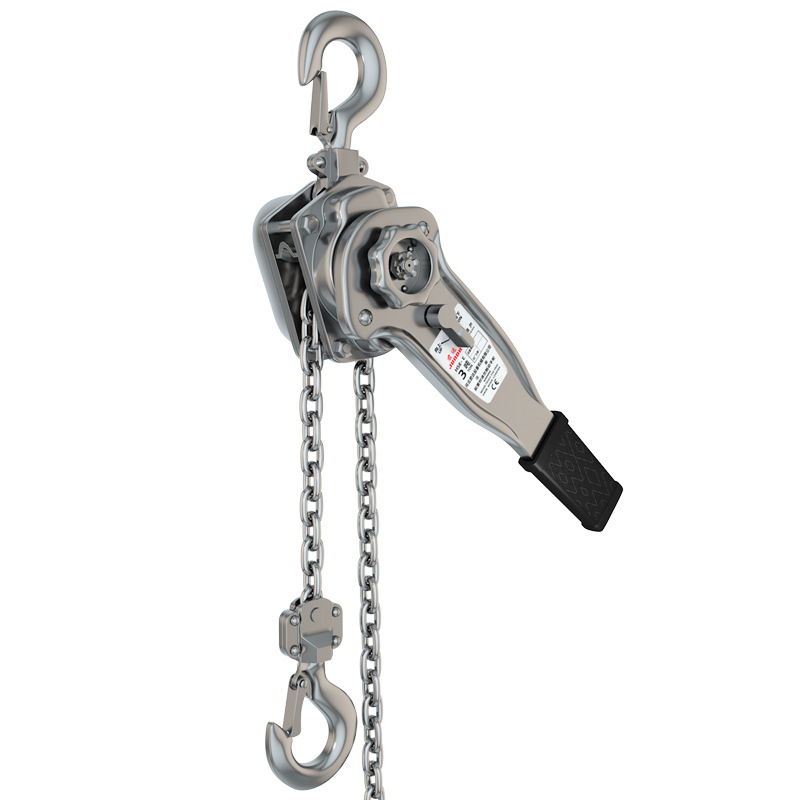
Core Components of Stainless Steel Lever Hoist
Dual Ratchet Brake Assembly
The brake system is the most important safety part of a lever hoist. Tieshou stainless steel lever hoist uses dual ratchet brake wheel disc design. When you operate the lever to lift or lower loads, ratchets engage alternately to control movement. Once you release the lever, the brake locks immediately to stop load falling. This structure avoids sudden slipping and idle rotation, which is especially important for high-value equipment lifting in marine and chemical sites. Single ratchet brakes have higher failure risk under continuous heavy load, so dual ratchet design is the preferred solution for industrial-grade stainless lever hoists.
360° Rotatable Forged Stainless Hook with Anti-Drop Latch
The upper and lower hooks are forged from solid 304 stainless steel instead of casting. Cast hooks may crack under overload. The anti-drop latch tightly locks the hook opening to prevent the load from slipping off accidentally. 360-degree rotation allows operators to adjust load angle freely without twisting the chain, improving flexibility in narrow space installation and equipment tensioning work.
Anti-Jamming Chain Guide & 304 Stainless Lifting Chain
The chain guide adopts baffle and card-slot integrated structure. It restricts chain movement path and stops chain twisting and jamming during repeated lever operation. The lifting chain is made of special 304 stainless steel. It maintains mechanical strength while resisting salt spray and moisture corrosion. Stainless chain cannot use ordinary grease; operators need to select compatible lubricants to prevent chemical reaction on stainless surface.
Stainless Steel Housing & Operating Lever
The shell protects internal gear and brake parts from splash, dust and corrosive liquid. The operating lever provides mechanical leverage for manual pulling. The surface is smooth and easy to clean, which fits food industry hygiene requirements.
Technical Parameter Reference Table
| Item | Specification |
|---|---|
| Product Name | Stainless Steel Lever Hoist |
| Lifting Capacity | 0.75T‑9T |
| Main Material | 304 Stainless Steel |
| Standard Lifting Height | 1.5M (Custom 1.5‑6M) |
| Certification | CE, ISO9001 |
| Test Load | 1.5 x rated working load |
| Packaging | Carton |
304 Stainless Steel VS Carbon Steel Lever Hoist Performance Comparison
Carbon steel lever hoist is cheap for dry indoor use. Its surface coating or galvanized layer will wear off after impact. Once the substrate is exposed to salt water or humid air, rust spreads quickly. Rust will increase chain friction, damage gear teeth and weaken hook strength. Stainless steel lever hoist solves this pain point. 304 material forms passive oxide film on surface, resisting weak acid, moisture and salt mist. The initial purchase cost is higher, but service life can be extended greatly in corrosive environments, reducing replacement cost and downtime loss.
Daily Operation & Maintenance Tips
Before every use, visually inspect the chain, hook and brake system. Check crack, deformation or corrosion marks on all stainless parts. Do not use the hoist if chain has distortion or hook opening is stretched. After working in marine or salt environment, rinse and clean the whole unit to remove salt residue, then fully dry it. Lubricate chain regularly with stainless-compatible lubricant. Store in dry and ventilated place, avoid long-term exposure to corrosive vapor.
For full product details and bulk inquiry, visit our product page: Stainless Steel Lever Hoist Product Page
Frequently Asked Questions
What are the main components of a stainless steel lever hoist?
Main components include 304 stainless steel housing, dual ratchet brake assembly, forged stainless hook, stainless lifting chain, chain guide and operating lever.
What is the working principle of dual ratchet brake in stainless steel lever hoist?
Dual ratchet brake locks the load automatically when you stop pulling the lever. It prevents load reverse slipping and ensures stable positioning during lifting or tensioning work.
What is the difference between 304 stainless steel and carbon steel lever hoist chain?
304 stainless chain resists salt mist and moisture corrosion. Carbon steel chain is easy to rust in humid environment even with galvanized surface treatment.
How to maintain stainless steel lever hoist after use?
Clean salt and dirt after use, dry all components, inspect chain and hook for deformation regularly, add lubricant suitable for stainless steel and avoid heavy chemical contact.
What is the test load for Tieshou stainless steel lever hoist?
Tieshou stainless steel lever hoist is tested with 1.5 times working load before delivery, complying with CE lifting equipment safety standards.


 sales@tieshouqizhong.com
 +8615132261111
 Alice Zhang
 Kang Wang
 Joyce Yang
 Home
 WhatsApp
 Email