

 English
 Russian
 Français
 Español
 اللغة العربية
 Japanese
 Korean
 German
 Tiếng Việt
 Italian

 Click:659
 Time:2026-04-24 21:57:31
In modern machining, mold manufacturing, and shipbuilding, moving heavy steel plates safely without damage is a major challenge. Manual Permanent Magnet Lifters have become the global standard for heavy material handling, offering strong suction without the need for electricity.
1. How It Works: The Physics of Magnetic Lifting
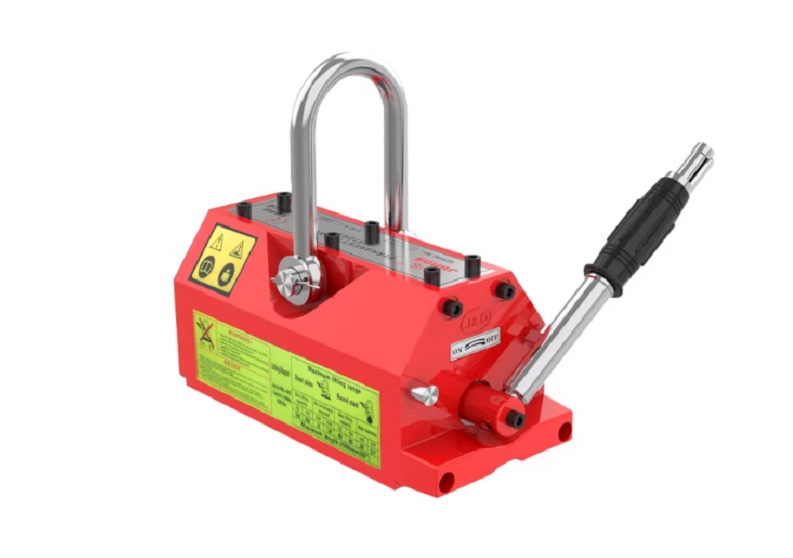
The secret behind a permanent magnet lifter lies in its internal high-performance NdFeB (Neodymium-Iron-Boron) rare earth magnets. By rotating the manual handle, the operator changes the position of the internal magnetic system to "close" or "open" the magnetic circuit.
When the handle is in the "ON" position, magnetic flux flows through the workpiece, creating a powerful hold. In the "OFF" position, the circuit is shorted internally, and the suction disappears. This mechanical locking mechanism eliminates the risk of dropping loads due to power outages.
2. Why Choose Tieshou Magnetic Lifters?
Not all magnetic lifters are created equal. Our products are optimized across several critical dimensions:
- High Safety Factor: We maintain a 3.0:1 to 3.5:1 safety ratio, ensuring stability even when air gaps or surface irregularities are present.
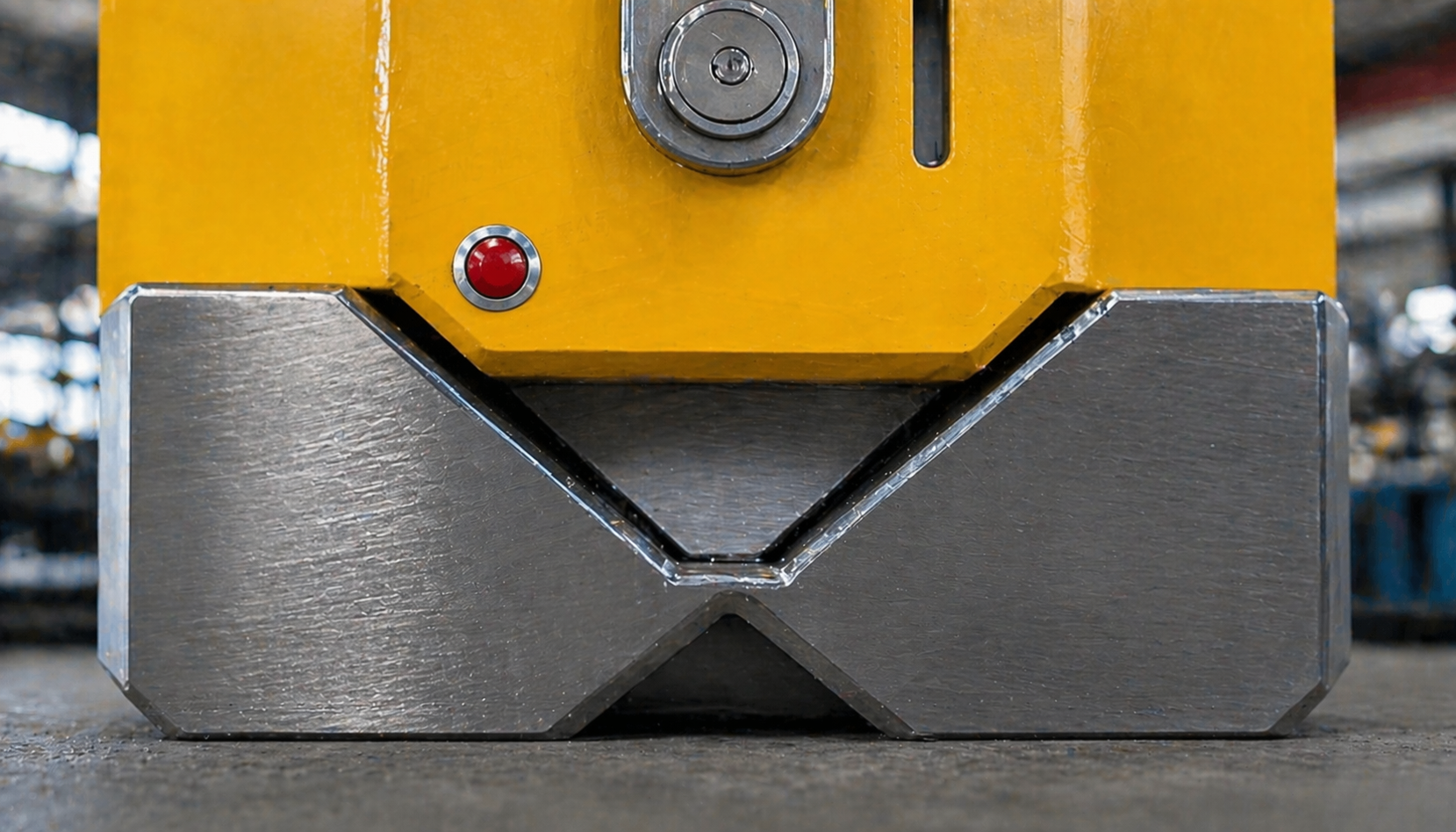
- V-Slot Design: The bottom surface features a unique V-shape, making it compatible with both flat steel plates and cylindrical steel/pipes.
- Safety Lock Handle: The manual switch is equipped with a safety button to prevent accidental deactivation during lifting operations.
- Maintenance-Free: With no internal circuitry and no wearing parts, these lifters offer extreme durability in harsh industrial environments.
3. Technical Specifications: 100kg to 5000kg
Choosing the right model depends on your maximum load requirements. See our core specifications below:
| Model (PML) | Rated Capacity (kg) | Max Pull-off Force (kN) | Typical Application |
|---|---|---|---|
| PML-100 | 100 | ≥ 3.5 | Precision Mold Handling |
| PML-600 | 600 | ≥ 21 | Medium Machining |
| PML-2000 | 2000 | ≥ 70 | Steel Structure Construction |
| PML-5000 | 5000 | ≥ 175 | Heavy Shipbuilding & Warehousing |
4. Performance Factors: What Affects Lifting Power?
To ensure safe operation, consider these variables that impact actual magnetic suction:
- Plate Thickness: If the steel is too thin, the magnetic circuit won't saturate, reducing lift capacity. Always check the thickness-to-lift ratio.
- Surface Roughness: Rust, paint, or uneven surfaces create air gaps. Keeping the contact surface clean maximizes safety.
- Material Composition: Low-carbon steels (like Q235) have high magnetic permeability. Alloys or high-carbon steel will reduce efficiency.
5. Wide Range of Industrial Applications
Due to their portability and high-strength magnetism, Tieshou lifters are widely used in:
- CNC Machining: Quick loading/unloading without scratching metal surfaces.
- Steel Trading: Improving warehouse loading speed without traditional wire rope binding.
- Dockyards: Moving massive segmented steel plates during hull assembly.
Frequently Asked Questions (FAQ)
Q: Does the lifter need periodic remagnetization?
A: No. Using high-grade NdFeB magnets, the magnetic decay is negligible over a decade under normal operating temperatures (<80°C).
Q: Can it lift stainless steel plates?
A: It depends on the grade. Austenitic stainless steels like 304/316 are non-magnetic and cannot be lifted. 400-series martensitic stainless steels can, though with reduced force compared to carbon steel.


 sales@tieshouqizhong.com
 +8615132261111
 Alice Zhang
 Kang Wang
 Joyce Yang
 Home
Home WhatsApp
 Email
Email