

 Japanese
 English
 Russian
 Français
 Español
 اللغة العربية
 Korean
 German
 Tiếng Việt
 Italian

Manual vs Electric Hoists – How Buyers Decide
 クリック:168
  時間:2026-01-23 11:28:57
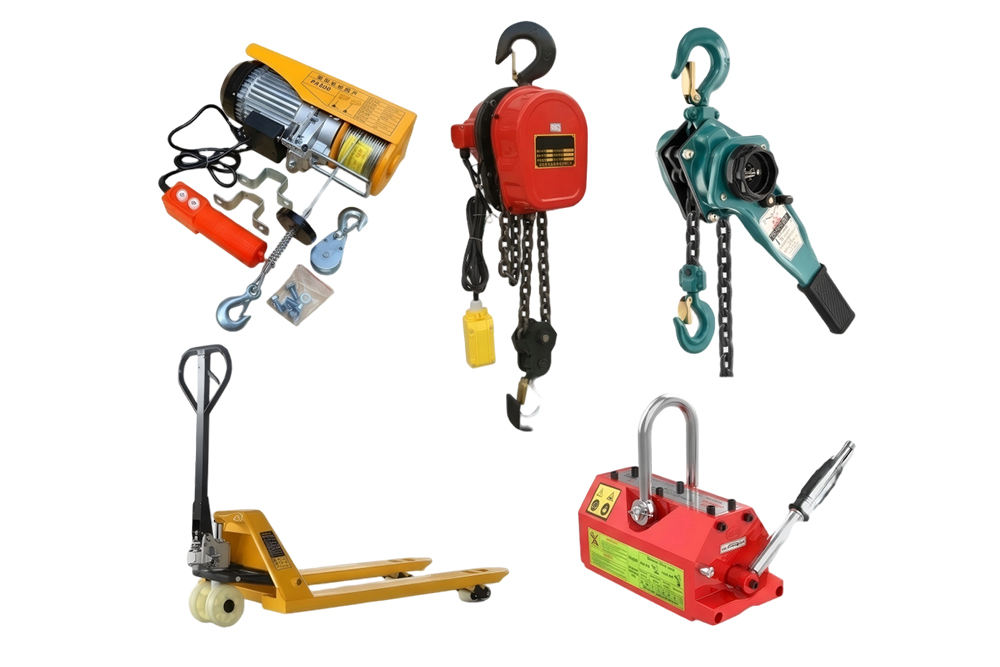
When it comes to choosing between manual and electric hoists, procurement decisions aren’t just about price tags—they’re about matching the right tool to your operational reality.
As a buyer or project manager, you need clarity beyond product specs. Let’s break down the tradeoffs from application fit, total cost, and maintenance perspectives to guide your call.
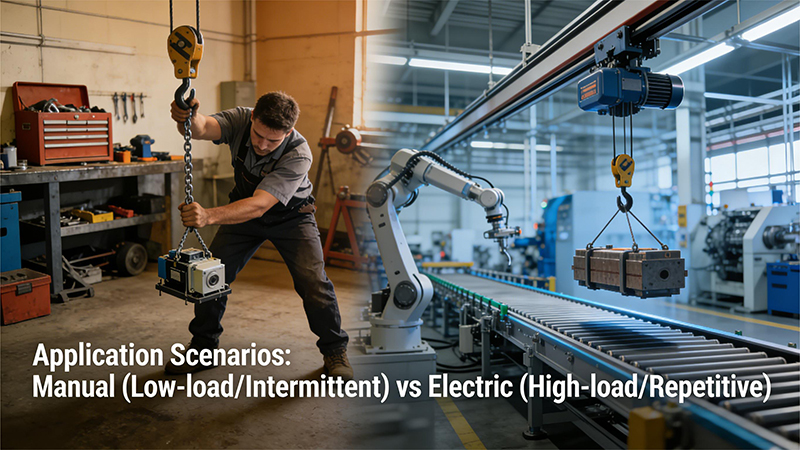
Manual Hoists
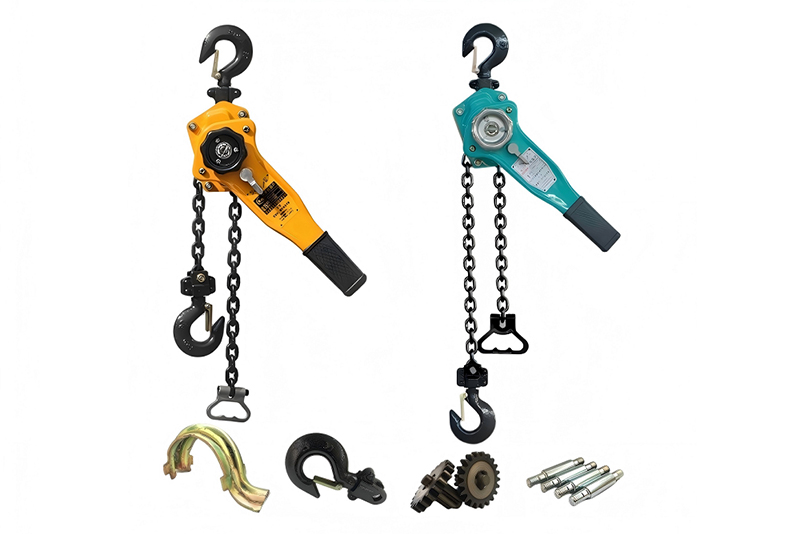
Perfect for low-load, intermittent use where portability and no power access are priorities. Think: small-scale maintenance, outdoor field repairs, or workshops with occasional lifting needs (≤500kg). They shine in tight spaces or remote job sites where electricity is a hassle.
Limitation: Not feasible for heavy loads (≥1 ton) or high-frequency lifting—physical fatigue and slow speed kill productivity fast.
Electric Hoists
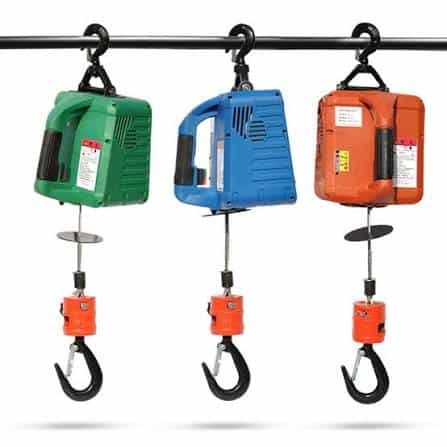
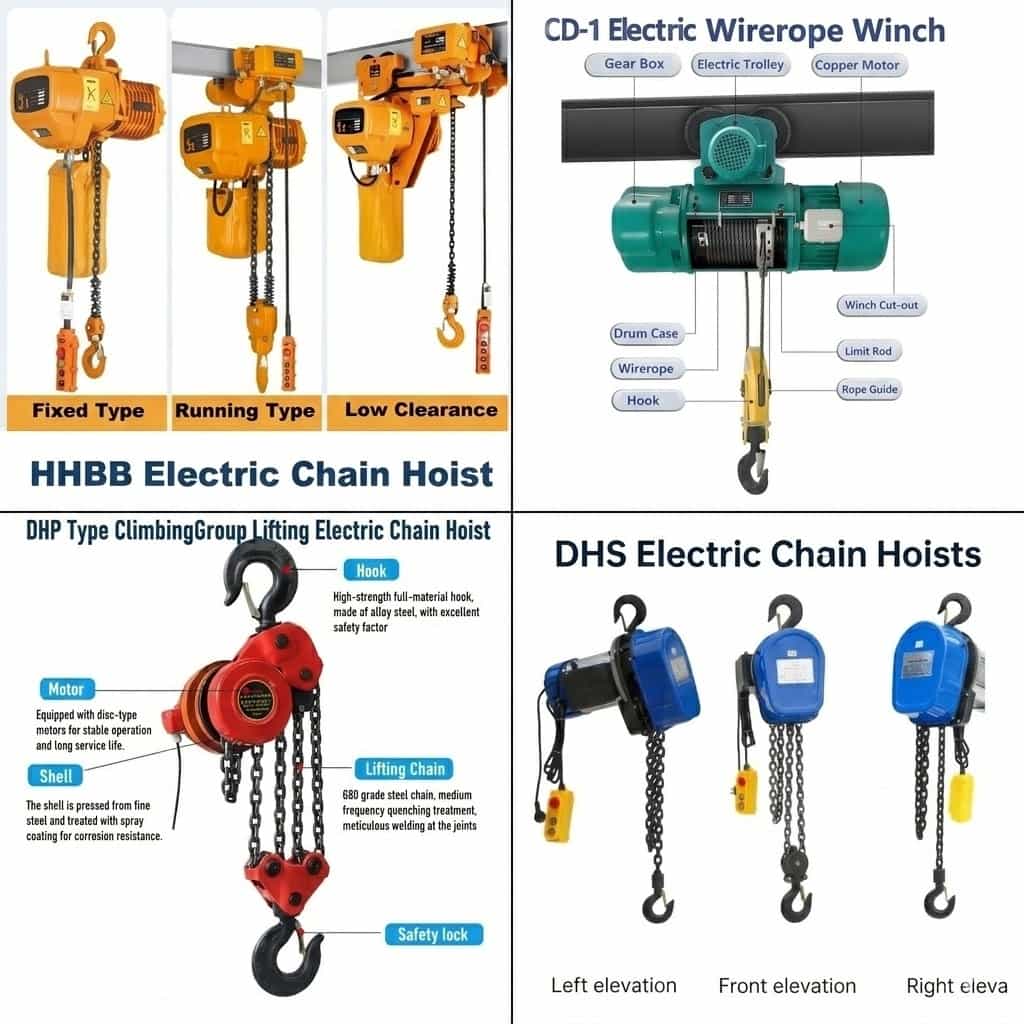
The go-to for high-load, repetitive operations (e.g., factory assembly lines, construction site material handling, warehouse cargo lifting). They deliver consistent speed, precise control, and reduced labor effort—critical for scaling output.
Limitation: Dependent on a stable power supply; less portable for off-grid projects.
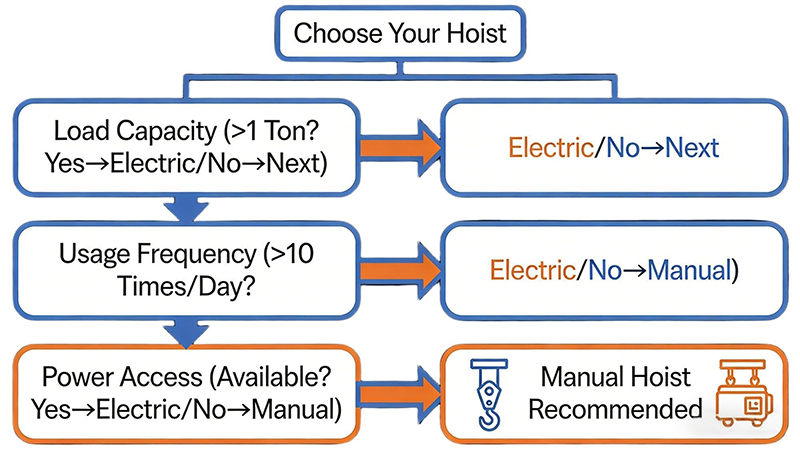
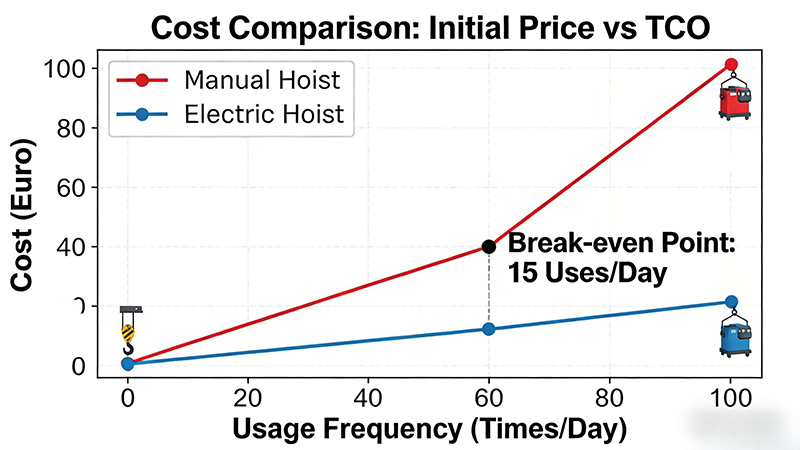
Procurement pros know: total cost of ownership (TCO) beats upfront cost every time.
Manual Hoists
✅ Low purchase cost: Budget-friendly entry point for small businesses or one-off projects.
❌ High hidden costs: Labor expenses add up fast with frequent use—each lift requires physical effort, slowing down workflows and increasing project timelines.
✅ Low long-term labor costs: Automation cuts down on manual work hours, boosting efficiency for daily operations.
❌ Higher upfront investment: Price includes motor, control systems, and safety features; may require additional costs for power supply setup (e.g., wiring for industrial sites).
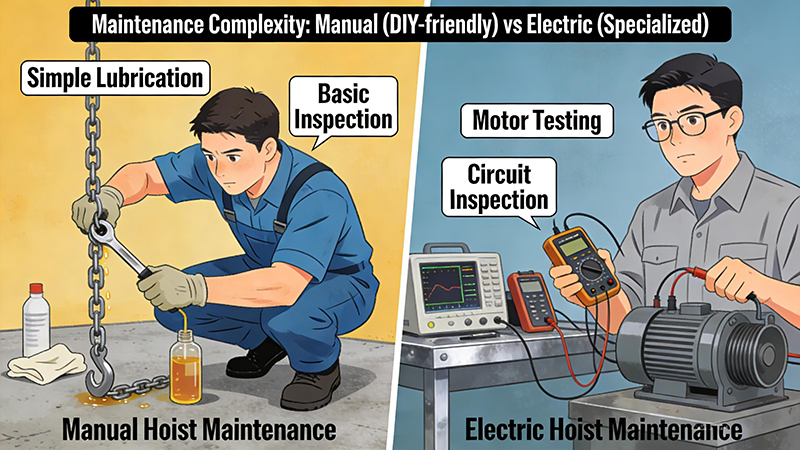
Maintenance frequency and complexity directly impact downtime and operational continuity.
Manual Hoists
Minimal maintenance needs: Simple mechanical structure (gears, chains, hooks) means upkeep is straightforward. Basic lubrication and occasional part replacements (e.g., chain links) are usually enough. No specialized technicians required—your in-house team can handle it.
Electric Hoists
Specialized maintenance required: Components like motors, remote control systems, and electrical circuits need regular inspections (e.g., checking for wear, testing electrical safety). Repairs often call for certified technicians, adding to long-term costs. Proactive maintenance is key to avoiding costly breakdowns.
At the end of the day, the best choice depends on your unique needs:
Are you lifting 200kg once a week? Manual hoist wins.
Are you lifting 1 ton 50 times a day? Electric hoist is non-negotiable.
Question for the community: What was the biggest factor that swayed your last hoist procurement decision? Was it cost, application constraints, or maintenance ease? Drop your insights in the comments!


 sales@tieshouqizhong.com
 +8615132261111
 Joyce Yang
 Alice Zhang
 Kang Wang
 ホーム
ホーム WhatsApp
 メール
メール